How to Grow Onions: The Complete Beginner's Guide
Updated: Sep 28
You can grow onions (Allium cepa) from seed sown indoors in January to March, or more easily from sets planted in March and April, spaced 10 cm apart with the tips just showing. Bulbs are ready to lift from July to September, once the leaves yellow and fall over. Autumn-planted sets overwinter and give an earlier harvest in June and July.
Onions are one of the easiest crops for a beginner in Ireland and the UK, and a well-grown, properly dried crop will keep you in onions for months. This guide covers choosing the right type, growing from seed and from sets, care, common problems, and harvesting and storing. At the end we look at perennial onions that come back every year without replanting.

Onion Quick Facts
Latin name: Allium cepa
Sow seed: indoors January to March; outdoors March to April
Plant sets: March to April (spring sets) or September to November (overwintering sets)
Spacing: 10 cm apart, rows 25 to 30 cm apart
Position: full sun, open and airy
Soil: firm, well-drained, pH 6.0 to 7.5
Time to harvest: about 20 weeks from spring sets; 8 to 10 weeks for spring onions
Harvest: June to July (overwintering), July to September (spring-planted)
Storage: 3 to 6 months when properly dried
Main problems: bolting, downy mildew, white rot, onion fly
Step 1: Choose Your Onion Type
Bulb onions: the classic storing onion. In Ireland and the UK choose long-day varieties, which start forming bulbs as days lengthen in early summer. Reliable choices include Sturon, Centurion, Stuttgarter and Red Baron (red).
Overwintering onions: hardy Japanese types such as Radar and Electric (red), planted as sets in autumn for an early summer crop.
Spring onions: fast, slim onions for salads and stir-fries, such as White Lisbon. White Lisbon Winter Hardy can be sown in late summer for spring picking.
Perennial onions: types such as Egyptian walking onions and Welsh onions come back every year from the same clump. More on these below.
Step 2: Grow Onions from Seed
Seed is cheaper than sets and gives a wider choice of varieties, but it takes longer and needs a head start indoors.
Sow indoors from January to March in modules, 4 to 6 seeds per cell, 1 cm deep. Onions grown in small clusters like this can be planted out together and still form good bulbs.
Keep at 10 to 15°C in good light. Germination takes 10 to 14 days.
Trim leggy seedlings back to about 10 cm to keep them sturdy.
Harden off and plant out in April, once the soil is workable, 25 to 30 cm between clusters.
Alternatively, sow direct outdoors in March and April in drills 1 cm deep, then thin to 5 to 10 cm apart.
For more on raising healthy seedlings, see our guide to starting vegetable seeds.
Step 3: Grow Onions from Sets
Sets are small, immature onion bulbs. They are the easiest way to grow onions, establish quickly, and cope better with a cool, wet spring.
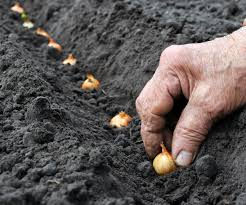
Plant spring sets from March to April, once the soil has dried enough to work. Plant overwintering sets from September to November.
Choose heat-treated sets where possible, as they are much less likely to bolt.
Push each set into firm soil so the tip is just showing, 10 cm apart in rows 25 to 30 cm apart.
Trim off any loose, papery skin at the tip. Birds pull up sets by tugging on it.
Cover with fleece or netting for the first few weeks if birds are a problem, and replant any that are lifted.
Step 4: Care for Your Onions
Weeding: onions have thin, upright leaves that cast little shade, so they compete poorly with weeds. Hoe or hand weed carefully and often, taking care not to damage the shallow roots.
Watering: in most Irish summers onions need little watering. Water only in prolonged dry spells, and stop once the bulbs have swollen, as late watering reduces storage life.
Feeding: dig in well-rotted compost before planting. Avoid high-nitrogen feeds after midsummer, which produce soft necks that rot in storage.
Mulching: a light mulch of compost between rows once plants are established helps suppress weeds and hold moisture. Keep it clear of the bulbs themselves.
Step 5: Prevent Common Onion Problems
Bolting (flowering): caused by cold snaps or planting too early into cold soil. Use heat-treated sets, and use bolted onions first as they won't store.
Downy mildew: grey, furry patches on the leaves, common in wet Irish summers. Space plants well for airflow and remove affected leaves.
White rot: white fluffy fungus at the base and yellowing leaves. It survives in soil for many years, so don't grow onions, garlic or leeks in affected ground and always rotate crops.
Onion fly and allium leaf miner: larvae tunnel into bulbs and stems. Cover crops with fine insect mesh.
Thick necks: usually too much nitrogen or bolting. Use these onions first.
Step 6: Harvest and Store Onions
Onions are ready when the leaves turn yellow and flop over, usually July to September for spring-planted onions and June to July for overwintering types. Wait until most of the foliage has fallen, then lift the bulbs on a dry day with a fork.
Dry them for 2 to 3 weeks in the sun, or in a greenhouse, polytunnel or airy shed if the weather is wet, until the skins are papery and the necks are completely dry.
Store in nets, trays or plaits in a cool, dry, airy place. Well-dried onions keep for 3 to 6 months; red onions usually store for less time than brown.
Use any with thick or soft necks first, as they won't keep.
Spring onions can be pulled as needed from about 8 to 10 weeks after sowing.
FAQ: Growing Onions
When should I plant onion sets in Ireland?
Plant spring onion sets from March to April, once the soil is dry enough to work. Overwintering sets go in from September to November and are ready to harvest in June and July.
Is it better to grow onions from seeds or sets?
Sets are easier and faster and cope better with cool, wet springs, which makes them the best choice for beginners. Seeds are cheaper and offer more varieties, but need sowing indoors from January to March.
Why are my onions bolting?
Onions bolt (send up a flower stalk) after a cold spell or when planted too early into cold soil. Heat-treated sets are much less likely to bolt. Bolted onions are fine to eat but won't store, so use them first.
How do I know when onions are ready to harvest?
Onions are ready when the leaves turn yellow and fall over. Lift them on a dry day once most of the foliage has collapsed, then dry them for 2 to 3 weeks before storing.
How long do home-grown onions last?
Properly dried onions keep for 3 to 6 months in a cool, dry, airy place. Red onions and onions with thick necks store for less time.
Perennial Onions: Plant Once, Harvest for Years
Bulb onions have to be replanted every year. Perennial onions stay in the ground and keep producing, which makes them ideal for a low-maintenance vegetable bed or food forest.
Egyptian walking onions (Allium × proliferum) are the standout. Instead of flowers, they form clusters of small bulbs at the top of their stems. When the stems bend over, the bulbs root where they land, so the clump slowly 'walks' across the bed. You can eat the top bulbs like shallots, the stems like spring onions, and the base bulbs in autumn. They are fully hardy in Ireland and the UK and need almost no care. Plant bulbs in spring or autumn, 15 to 20 cm apart.
For everyday onion flavour from spring to autumn, chives and garlic chives are easy, hardy perennials. Their flowers are edible and very popular with pollinators, and both grow well at the edge of a bed or under fruit trees.


Comments