How to Grow Fig Trees in Ireland: Planting, Pruning and Fruit

Figs (Ficus carica) grow and fruit well in Ireland and the UK when planted in a warm, sheltered spot, ideally against a south-facing wall, with their roots restricted. Start with a named, self-fertile variety grown from a cutting, plant it in spring or during the dormant season, and expect your first figs within two to three years. This guide covers choosing a variety, planting, pruning, harvesting and propagating figs in a cool climate.
Short on time? Start with a named, self-fertile tree. Our Violette Dauphine fig tree produces large, sweet violet figs and needs no pollinating partner.

Fig Quick Facts
Latin name: Ficus carica
Pollination: choose a self-fertile (common) variety; no partner or pollinating insect needed
Position: full sun, against a south- or west-facing wall or in the most sheltered corner
Roots: restrict them in a lined pit or a large container to encourage fruit
Planting: November to March for bare-root trees; potted trees in spring
First figs: usually 2 to 3 years after planting a young tree
Harvest in Ireland: late summer to early autumn
Mature size: 3 to 5 m unrestricted; smaller in a pot or trained on a wall
Why Not Grow Figs from Seed?
You can grow a fig from seed, but it's rarely worth the effort. Most figs sold in shops are imported varieties, and many seedlings belong to types that only ripen fruit after pollination by a tiny fig wasp that doesn't live in Ireland or the UK. Seedlings are also frost tender for their first years, vary from their parent, and can take five years or more to reach fruiting size, if they fruit at all.
Every reliable fig variety is grown from cuttings, which means each tree is a clone of a proven, self-fertile parent. Starting with a named variety, or a cutting from one, is the only dependable way to get figs you can pick.
Step 1: Choose a Named Variety
Choose a common, self-fertile fig. These set fruit without pollination, so a single tree will crop on its own.
Violette Dauphine: large, purple-skinned fruit with sweet red flesh, suited to a warm wall or a large container.
Brown Turkey: the most widely grown fig in Irish and UK gardens, hardy and reliable, with medium brown fruit.
Step 2: Pick the Warmest Spot
Figs need as much sun and warmth as you can give them to ripen fruit in a cool summer. A south- or west-facing wall is ideal, as the brickwork or stone stores heat during the day and releases it at night. Shelter from cold winds matters as much as sun. Avoid frost pockets and heavy, waterlogged soil.
Step 3: Restrict the Roots
An unrestricted fig grows into a large, leafy tree with few fruit. Restricting the roots channels its energy into figs instead.
Dig a pit: about 60 cm wide, long and deep, against the wall.
Line the sides: with paving slabs or similar, set on edge, to box in the roots.
Add drainage: put a 15 to 20 cm layer of broken brick or rubble in the base.
Backfill: with garden soil mixed with a little compost; figs do not need rich soil.
Plant at the same depth: the tree grew in its pot or nursery, then water in well and mulch.
In a small garden or on a patio, a large container of 45 to 60 cm across does the same job.
Step 4: Water and Feed
Water young trees in dry spells for their first two summers, and water container figs regularly, as dry roots cause the fruit to drop. Once established in the ground, figs are fairly drought tolerant. A high-potash feed, such as tomato feed or comfrey tea, every two weeks from late spring to midsummer helps fruit swell. Avoid high-nitrogen feeds, which produce leaves at the expense of fruit.
Step 5: Prune for Fruit
Late winter or early spring: remove dead, damaged or crossing branches, and keep an open framework of well-spaced stems. On a wall, tie the main branches into a fan shape.
Early summer: pinch out the tips of new shoots once they have five or six leaves. This encourages the small embryo figs that ripen the following year.
Wear gloves: fig sap can irritate skin, especially in sunlight.
Understanding the Fig Crop
In a warm climate, figs crop twice a year. In Ireland and the UK, only one crop usually ripens. Pea-sized figs that form at the shoot tips in late summer survive the winter and ripen the following summer. Larger, unripe figs still on the tree in autumn won't ripen and are best removed so the plant puts its energy into next year's crop. In cold winters, protect young trees with horticultural fleece so the embryo figs aren't damaged by frost.
Harvesting Figs
Figs are ready from late summer into early autumn, when the fruit is soft, slightly drooping on its stalk, and the skin has fully coloured. A ripe fig often shows a small drop of nectar at its base or a slight split in the skin. Figs don't ripen further once picked, so leave them on the tree until they're fully soft, and check every couple of days.
How to Grow a Fig from a Cutting
If you have access to a healthy, named fig, a hardwood cutting is a far more reliable way to raise a new tree than seed.
Take the cutting: in late winter, cut a 20 to 30 cm length of last year's growth, about pencil thickness, just below a bud.
Pot it up: insert it two-thirds deep into a pot of gritty compost, or straight into a sheltered spot in the ground.
Keep it cool and moist: a cold frame or unheated greenhouse is ideal. Roots form over spring and summer.
Pot on: move rooted cuttings into larger pots the following spring and plant out after a year or two.
A rooted cutting is identical to its parent, so it will fruit in the same way, often within two to three years.
FAQ: Growing Figs in Ireland
Can you grow figs outside in Ireland?
Yes. Figs grow well outdoors in Ireland and the UK in a sunny, sheltered spot, ideally against a south-facing wall. Choose a self-fertile variety, restrict the roots in a lined pit or a large container, and protect young trees with fleece in hard frosts. Established trees are hardy and can crop for decades.
Why is my fig tree not producing fruit?
The most common reasons are unrestricted roots, too much shade, or too much nitrogen. An unrestricted fig puts its energy into leafy growth instead of fruit. Restrict the roots, give the tree your sunniest spot, feed with potash rather than nitrogen, and pinch out new shoots in early summer to encourage embryo figs.
Can you grow a fig tree from a shop-bought fig?
You can, but it's rarely worthwhile. Seeds from imported figs often germinate, but many seedlings need a pollinating wasp that doesn't live in Ireland or the UK, and they take years to reach fruiting size. A named, self-fertile variety grown from a cutting is far more reliable and fruits within a few years.
Can I grow a fig tree in a pot?
Yes. A container of 45 to 60 cm across restricts the roots naturally and suits patios and small gardens. Use a gritty, free-draining compost, water regularly in summer, feed with a high-potash feed, and move the pot to a sheltered spot or wrap it in fleece in very cold weather.
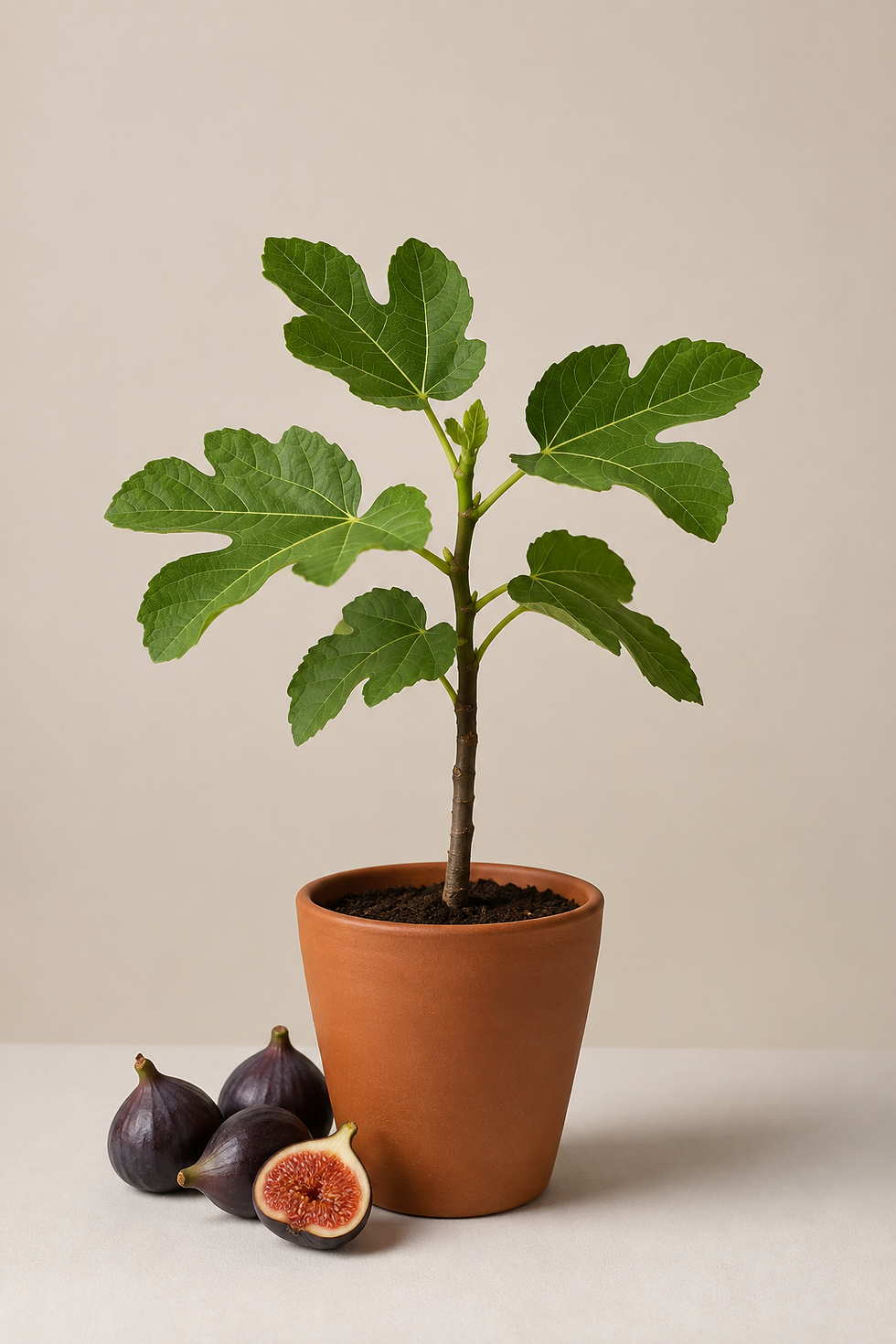
Plant a Fig This Winter
A fig against a sunny wall is one of the most rewarding fruit trees you can grow in an Irish garden. Bare-root season runs from November to March, a good time to plant. Our Violette Dauphine fig is self-fertile and suited to a warm wall or a large pot, and you can browse more fruit trees at Earthling Plants; orders over €150 ship free. To plan where a fig fits alongside your other fruit trees, see The Complete Food Forest Blueprint, our step-by-step ebook.


Comments