How to Grow Globe Artichokes in a Cool Climate Like Ireland

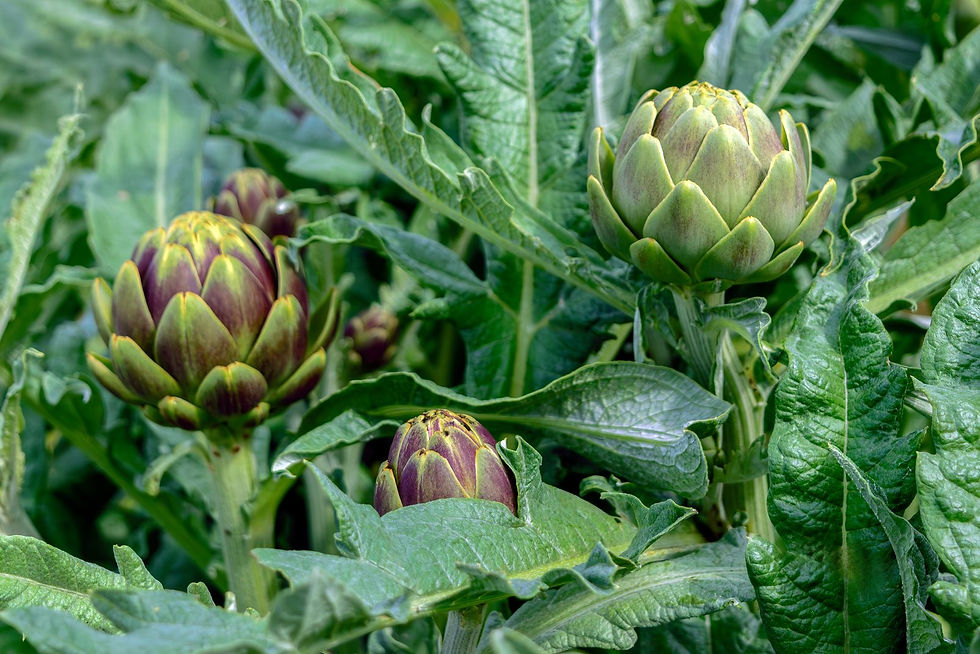
Globe artichokes grow well in a cool climate like Ireland's as long as three things are right: full sun, soil that drains, and a mulch over the crown in the first winter. Get those right and a plant crops from its second summer for five or six years, giving a dozen buds a season from a clump 1 m across that looks better than most things in the flower border. This guide covers what an artichoke actually is, the honest difference between a seed-raised plant and a nursery one, planting, the first year, harvest, winter care and the kitchen. The timings are Irish; they hold across the UK, Brittany and the Low Countries, and a colder continental winter needs a heavier mulch.
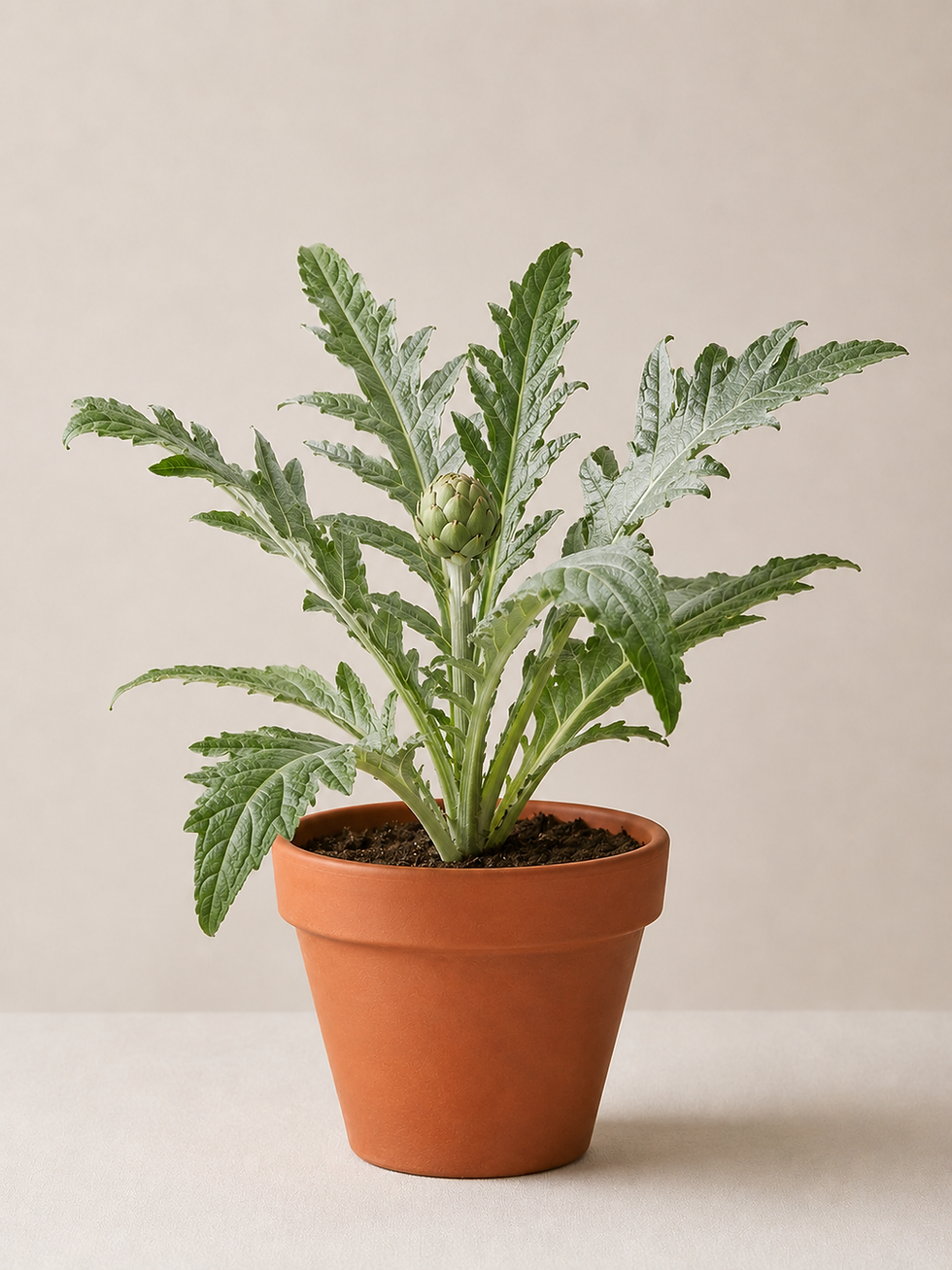
Short on time? Our nursery-grown globe artichoke plants go out in April or May and crop the following June.
What a Globe Artichoke Is
A globe artichoke (Cynara cardunculus var. scolymus) is a thistle. The part you eat is the unopened flower bud: the fleshy base of each scale, and the heart underneath, which is the bud's base before the flower forms. The hairy "choke" in the middle is the mass of immature florets, and if you leave a bud on the plant it opens into a violet thistle flower the size of a fist that bees will not leave alone.
It was bred from the cardoon, the wild thistle of the Mediterranean that the Greeks and Romans ate for its leaf stalks. The large-budded artichoke we grow seems to have been selected in Sicily and southern Italy in the Middle Ages, spread through Italy and France by the 1500s, and reached Britain and Ireland as a gentleman's vegetable soon after. It stayed a luxury here for centuries because it needs space, and a plant that gives twelve buds a year is not how you feed a family from a cottage plot. It is, though, how you feed a family that likes artichokes from a modern garden with a spare square metre.
Why It Works in a Cool Climate
The artichoke's reputation as a tender plant comes from one habit: it hates wet feet in winter far more than it hates cold. An established clump of a hardy variety survives minus 10 °C in dry soil and rots at minus 2 °C in waterlogged soil. In Ireland and Britain the winters are mild and wet, so the whole game is drainage and a dry crown. Grown on a raised bed or a slope, in gritty soil, with its own dead leaves folded over the crown in November and a thick mulch on top, it comes through most winters and crops for years. The coastal gardens of Cork, Kerry and Cornwall grow it almost without trying.
Variety matters more than for most vegetables. Green Globe Improved is the reliable standard, with large green buds. Purple Globe has purple-tinged buds and a nuttier heart. Gros Vert de Laon is the hardy French variety for the coldest, most exposed sites. The Italian and southern French types with the best flavour are also the ones that die in an Irish winter, so a plant from a nursery in a similar climate is a safer bet than seed from a Mediterranean catalogue.
Plant or Seed? The Honest Answer
Artichokes grow from seed, and it is cheap. The problem is that seed-raised plants do not come true. Sow a packet and you get a dozen different plants: some with fat, fleshy buds, some with small spiny ones you cannot eat, and most in between. The usual advice is to raise ten, keep the two best and dig the rest out, which is a year's work to find out what you have. Seed-raised plants are also spinier on average, which matters when you are picking them.
A nursery plant is a division or offset of a known, selected clump, so it is the same plant as its parent: same bud, same flavour, same hardiness. That is the whole case for buying one, and it is why artichokes have been passed round gardens as offsets for five hundred years rather than sown. If you enjoy the lottery, sow seed indoors in February and plant out in May; otherwise one good plant will give you offsets of its own within three years.
Globe Artichoke Quick Facts
Latin name: Cynara cardunculus var. scolymus
Type: herbaceous perennial, 1 to 1.5 m tall and 1 m across
Hardiness: established plants to about minus 10 °C in dry soil; first-year plants need a mulch
Position: full sun, sheltered from strong wind
Soil: fertile, free draining; raised bed on heavy clay; never waterlogged
Spacing: 75 to 90 cm apart
Planting: young plants April to May; offsets in spring
First harvest: second summer (remove buds in year one)
Harvest season: June to August; up to 12 buds a plant at maturity
Lifespan: 4 to 6 years, then divide
Step 1: Choose the Site and Prepare the Soil
Give an artichoke the sunniest, best-drained bed you have, with room for a plant 1 m across. On heavy or wet soil, build the bed up 20 to 30 cm or plant on a mound, and work in two buckets of compost per square metre plus a bucket of grit if the soil is clay. Shelter matters: the leaves are big and the flower stems tall, and a plant in a wind tunnel gets shredded. A spot against a south or west facing wall is ideal, and it suits a flower border as well as a vegetable bed.
Step 2: Plant in Spring
Plant young plants from mid April to the end of May, once hard frosts have passed, 75 to 90 cm apart and at the depth they were in the pot. Water them in and keep them moist for the first month. Offsets, the rooted shoots that appear round an established clump in spring, are planted the same way after trimming their leaves to 15 cm. In a pot, use a container at least 45 cm wide and deep with loam-based compost, and expect to water it every day in summer.
Step 3: The First Year
In the first summer, cut off any flower buds as they appear. It feels wrong, but a young plant that is allowed to crop puts everything into buds and goes into its first winter weak. Water in dry spells, mulch with compost in June, and let the plant build a crown. In late October, cut the faded leaves at the base and lay them over the crown, then cover with 15 cm of straw, bracken or dry leaves held down with a net. In a hard frost add a sheet of fleece. Remove the mulch in March once the worst is over, so the crown does not rot under it.
Step 4: Harvest from the Second Summer
From June of the second year, buds come on tall stems: one large terminal bud first, then smaller side buds through July and August. Cut each bud while it is full sized but still tight, with 5 cm of stem, just above a leaf joint, using secateurs. Check every few days in warm weather, because a bud goes from perfect to open in a week. A mature plant gives eight to twelve buds a season; the small side buds are the best eating.
Leave one or two late buds to open if you can spare them. The flowers are among the best bee plants in the garden, and the dried heads last all winter in a vase.
Step 5: Winter Care and Division
Each autumn, repeat the first-year routine: cut back, fold the leaves over, mulch. Established plants of a hardy variety need less, but a dry crown costs nothing. In spring, mulch with compost and water through any dry spell while the buds are forming; drought is what gives small, tough buds.
After four or five years the clump gets crowded and the buds get smaller. In March or April, lift it, pull away the strongest offsets with a piece of root each, replant them in fresh ground, and compost the old woody centre. This is also how you give plants to friends, which is how most artichokes in Ireland have travelled.
Globe Artichokes in the Kitchen
Soak a bud in salted water for ten minutes to evict any earwigs, trim the stem and the top third of the bud, and boil or steam it for 25 to 40 minutes depending on size, until an outer scale pulls away easily. Eat it by pulling off each scale, dipping the base in melted butter, vinaigrette or hollandaise, and scraping the flesh off with your teeth. When you reach the hairy choke, scoop it out with a spoon and eat the heart underneath whole. Small side buds, no bigger than an egg, can be halved, the choke removed, and roasted or fried whole in olive oil with garlic; this is how they are eaten in Rome.
Troubleshooting Globe Artichokes
The plant rotted over winter. Wet soil or a mulch left on too long. Replant on a raised bed and lift the mulch in March.
Blackfly on the buds. Common in June. A hard spray of water or a squeeze with the fingers deals with most; the ladybirds arrive within a fortnight.
Small, tough buds. Drought while the buds formed, or an old clump that needs dividing.
No buds at all in year two. The plant was allowed to crop in year one and is still recovering, or it is in shade. Give it sun and another year.
Slugs on young plants. Protect new plantings for the first month; established plants are too coarse for slugs to bother with.
FAQ: Growing Globe Artichokes
Are globe artichokes perennial? Yes. A globe artichoke is a herbaceous perennial that crops for four to six years from its second summer, dying back each winter and regrowing in spring. After that the clump is divided and the offsets replanted, so a single plant can be kept going indefinitely.
Can you grow globe artichokes in Ireland? Yes, in full sun on well-drained soil, with a mulch over the crown in winter. They dislike wet winter soil far more than cold, so a raised bed or a slope is the key. Hardy varieties such as Green Globe Improved and Gros Vert de Laon suit an Irish or British garden best.
How long until a globe artichoke produces? From the second summer after planting. In the first year the buds are removed so the plant builds a strong crown. From year two, expect six to twelve buds a season from June to August.
Should I grow globe artichokes from seed or plants? Plants, unless you want to experiment. Seed-raised artichokes are variable and often spiny; you raise many to find a few good ones. A nursery plant is a division of a selected clump, so you know what you are getting, and it gives you offsets of its own within three years.
Do globe artichokes need protection in winter? In their first winter, yes: cut the foliage back and lay it over the crown, then cover with 15 cm of straw or dry leaves, with fleece in a hard frost. Established plants of hardy varieties usually come through an Irish or British winter with a light mulch, as long as the soil drains.
A Plant That Pays You Back
Earthling Plants grows globe artichokes at our nursery in Co. Wicklow and ships them across Ireland, the UK and the EU. They belong with the other plant-once crops in our perennial vegetables guide, alongside asparagus and rhubarb, the two other perennials that make an early summer bed worth having.
Related reading: Perennial vegetables for Irish gardens · Grow asparagus · The best pollinator plants


Comments