Why Your Fruit Tree Isn't Fruiting: Eight Causes and What to Do

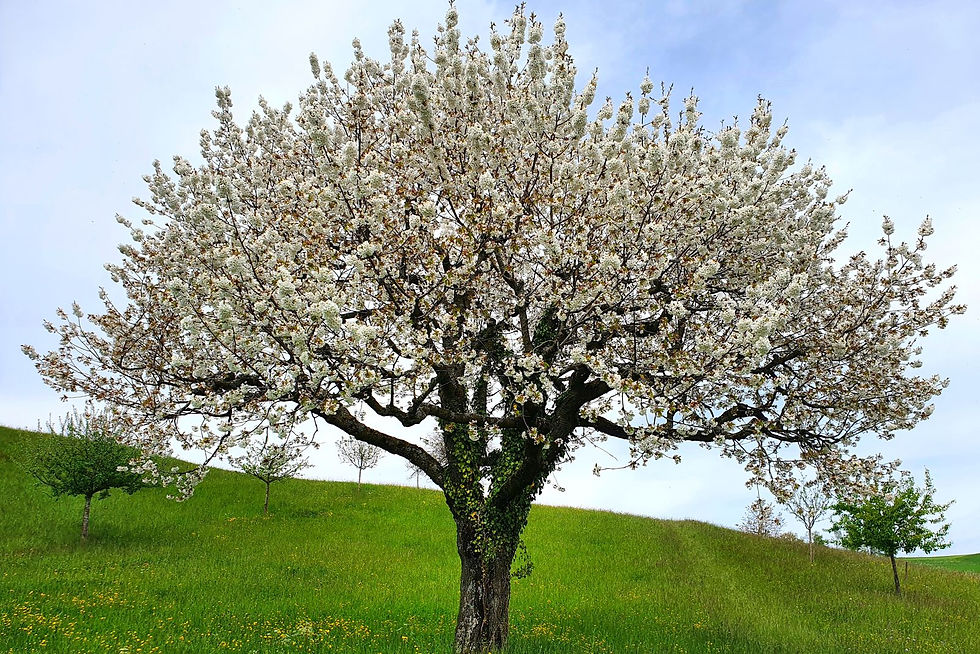
A fruit tree that flowers and sets nothing, or never flowers at all, is nearly always telling you one of eight things: it is too young, it has no pollination partner, frost killed the blossom, it is growing too hard, it was pruned at the wrong time or too much, it is in shade, it went dry at fruit set, or it is in the off year of a biennial habit. This guide takes the eight in the order to check them, with the fix for each. It is written for Ireland and holds across the UK and any cool, wet climate where late frost and poor pollination weather are normal.
First, Work Out Which Problem You Have
Two questions narrow it down. Did the tree flower? And if it flowered, did any tiny fruit form before dropping? A tree that has never flowered is nearly always young, overfed, overpruned or shaded. A tree that flowers well but sets nothing has a pollination problem, a frost problem, or both. A tree that sets fruit and sheds most of it in June is usually doing what it should, or is short of water. A tree that crops heavily one year and not the next is biennial.
1. The Tree Is Too Young
This is the cause most people have and least want to hear. A nursery tree is sold at one or two years old, and the first real crop comes years later. Published figures from two university extension services put apples at two to five years from planting, pears at four to six, plums at three to six, sour cherries at three to five and sweet cherries at four to seven. A tree on a dwarfing rootstock crops one to three years sooner than the same variety on a vigorous one, which is one of the reasons nursery apples are grafted on rootstocks such as M9 and M26 rather than grown from seed. A seedling apple can take ten years to flower and still give a crab.
There is nothing to fix here except patience. A tree that flowers in its first spring after planting should have those flowers rubbed off: it lost most of its roots in the move and cannot feed a crop, and a year spent building roots pays back in year three.
2. It Has Nobody to Pollinate It
Most apples, most pears, sweet cherries and the Japanese plums cannot set fruit with their own pollen. They need a different variety of the same fruit, flowering at the same time, within reach of a bee, which in a garden means within about 20 m, so a neighbour's tree counts. European plums, damsons, sour cherries, quince and figs set fruit alone. A single apple in a new estate with no other apples nearby flowers every spring and sets almost nothing.
Flowering time matters as much as variety. Apples are sorted into pollination groups by when they flower, and a partner one group either side overlaps; two groups apart it may not. Triploid varieties such as Bramley and Blenheim Orange produce useless pollen and need two other varieties around them, one to pollinate the triploid and one to pollinate the pollinator. A crab apple flowers long and heavily and pollinates almost any apple, which is why old orchards have one at the end of the row. Bees do not fly in cold wind and rain, so a wet week over flowering gives a poor set even with the right partner nearby; shelter and early nectar plants, which the pollinator post covers, bring the bees on the few good days.
3. Frost Took the Blossom
A fruit bud gets more tender as it opens. An extension service in Nebraska published kill temperatures by bud stage, and the pattern holds anywhere: at the first pink stage an apple bud takes about minus 2 °C before a tenth of the buds die, and around minus 4 °C kills most of them; open blossom of practically every fruit tree is killed at about minus 4 °C, and pear and plum blossom goes at a degree or two warmer than apple. The damage is often invisible: the petals look fine next morning, but the pistil in the centre has blackened and the flower will never set. Cut a few open after a frosty night and look.
In a cool climate the late frosts of April and May do more harm than the cold of January, because the tree is in flower. Plant late-flowering varieties where frost is a habit, keep trees out of hollows where cold air collects, cover a small tree with fleece on a clear, still night when frost is forecast and take it off in the morning for the bees. Our bare-root planting guide has the site advice in detail: planting bare-root fruit trees.
4. It Is Growing Too Hard
A tree makes either wood or fruit buds with the energy it has, and a tree that is fed nitrogen and pruned hard makes wood. The sign is long, soft, upright shoots and lush leaves on a tree that never flowers. A bearing tree should make roughly 30 to 45 cm of new shoot a year; a young tree not yet bearing, 45 to 75 cm. More than that, and the tree is being pushed. Stop the feed: fruit trees in reasonable soil need nothing beyond a mulch, and lawn feed spread under a tree is the commonest cause of this in gardens. Branches that grow straight up make leaves; branches pulled towards horizontal, around 60 degrees from the trunk, make fruit buds, and tying a young branch down for a summer with string is an old trick that works.
5. It Was Pruned Wrong
Winter pruning invigorates a tree; summer pruning calms it. A tree hacked back every winter responds with a thicket of water shoots and no fruit, because the cuts remove fruit buds and the tree spends the year replacing wood. Apples and pears fruit on spurs on two year old and older wood, so a tree pruned so that nothing is ever two years old has nothing to fruit on; plums and cherries should not be winter pruned at all because of silver leaf. Prune less, prune apples and pears lightly in winter and shorten summer growth in August, and never take more than a fifth of the canopy in a year. Our pruning guide covers spur-bearing and tip-bearing apples: prune a tip-bearer like a spur-bearer and you cut off every bud.
6. It Is in Shade
Fruit trees need full sun to set fruit buds. A tree with four hours of direct light makes leaves and little else, and the shade from a fence, a house or a bigger tree grows every year; root competition from a nearby hedge takes the water as well. There is no fix short of moving a young tree in winter, or removing what shades it.
7. It Went Dry at Fruit Set
The six weeks after flowering decide the crop. The tree sets more fruitlets than it can carry and sheds the surplus in June, the June drop, which is normal; a tree short of water at that point sheds almost everything. In a wet climate this sounds unlikely, but a dry May on a free-draining site or a tree in a pot can lose the crop that way. A mulch over the root zone in spring and a can of water a week for a young tree in any dry spell from flowering to midsummer is the whole answer.
8. It Is Biennial
Some apples and pears, and some individual trees of any variety, fall into a habit of a huge crop one year and nothing the next. The tree sets next year's flower buds in the summer while this year's fruit is swelling, and a heavy crop takes all the energy, so no buds form and the following spring is bare; the bare year lets it make buds again, the year after is heavy, and the cycle locks in. Bramley is famous for it.
The cure is to thin the heavy year, early and hard. Within a month of flowering, when the fruitlets are the size of a hazelnut, remove them to one or two per cluster and a hand's width apart along the branch; the extension guidance is four to seven fruit per 90 cm of branch, and 30 to 40 leaves for every fruit. It feels like throwing away the crop; what you get is fewer, larger apples this year, a crop next year as well, and after two or three seasons the habit usually breaks.
What Is Not the Problem
Three things get blamed and rarely deserve it. The variety is almost never wrong for the climate if it came from a nursery in that climate. The soil is almost never too poor; fruit trees crop on thin, hungry ground all over the west of Ireland and sulk in rich beds. And the tree is almost never too old; a neglected forty year old apple brought back with light pruning over three winters crops as it did at ten. If the tree is healthy and growing, the answer is on the list above.
Frequently Asked Questions
How Long Does a Fruit Tree Take to Fruit?
From planting, an apple takes two to five years, a pear four to six, a plum three to six and a sweet cherry four to seven, on nursery-grafted trees. Dwarfing rootstocks bring that forward by one to three years. A tree grown from seed can take ten years and will not match its parent. Rub off any flowers in the first spring after planting so the tree builds roots.
Why Does My Apple Tree Flower but Not Fruit?
Either nothing pollinated it or frost killed the blossom. Most apples need a second variety flowering at the same time within bee range, and a crab apple is the surest partner. A frost of minus 2 to minus 4 °C on open blossom kills the centre of the flower while the petals look fine. Cover a small tree on frosty nights.
Does a Fruit Tree Need a Second Tree?
Most apples, most pears, sweet cherries and Japanese plums do. European plums, damsons, sour cherries, quince and figs set fruit on their own. A crab apple pollinates almost every apple variety, and a neighbour's tree counts if it is within about 20 m. Triploid apples such as Bramley need two other varieties nearby.
Why Does My Tree Crop Only Every Second Year?
It has fallen into biennial bearing: the heavy crop stops next year's flower buds forming. Thin the fruitlets hard within a month of flowering in the heavy year, to one or two per cluster and about a hand's width apart, and keep doing it each heavy year. The habit usually breaks within two or three seasons.

For most trees the fix is one of two things: time, or a partner. If you are choosing a tree now, the fruit tree section lists the ones we grow at Earthling Plants in Co. Wicklow, and our guide to the best fruit trees for a climate like Ireland is the place to start.


Comments