The Best Windbreak Trees for Irish Gardens (and How to Plant One)

The biggest limit on most Irish gardens is not cold, rain or slugs; it is wind. A good windbreak calms the wind for a distance of up to ten times its own height, which means a 5 m belt of trees can change the growing conditions across half an acre. Plant one this bare-root season and everything downwind of it, from fruit trees to vegetable beds to the people having their tea outside, lives in a kinder climate. Here is how shelter actually works, and the trees that do the job in Irish conditions.
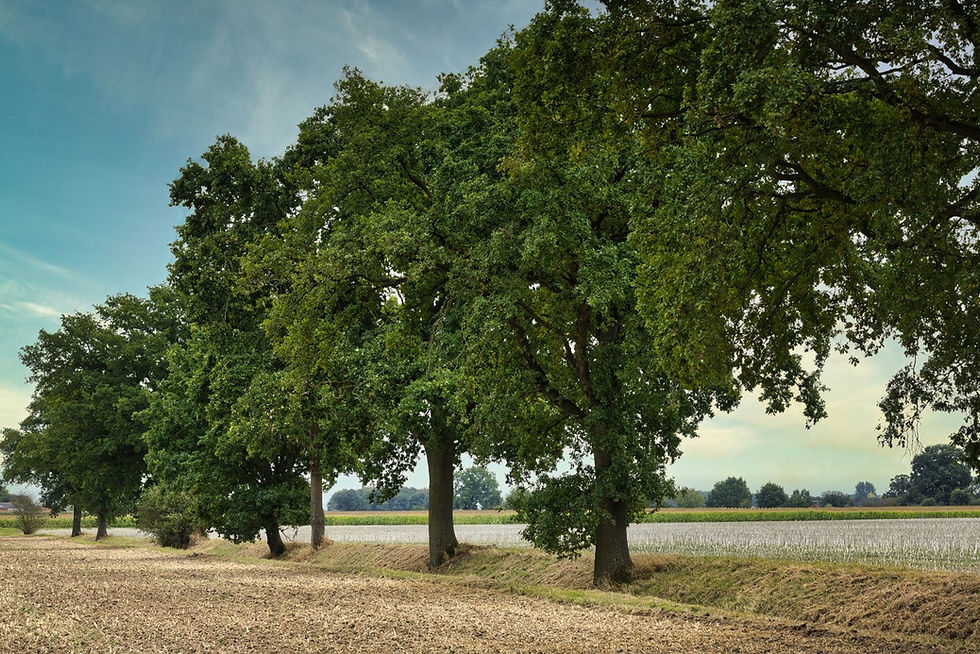
What Wind Actually Costs You
Wind damage is mostly invisible. Long before anything snaps, moving air is stripping warmth and moisture from every leaf, forcing plants to spend energy on survival instead of growth. Sheltered crops grow faster, fruit set improves because pollinating insects can actually fly, taller plants stop lodging, and the growing season stretches at both ends because the garden holds its warmth. Near the coast, shelter also means less salt burn.
There is a wildlife dividend too. A belt of mixed trees is a corridor, a nest site and a winter larder, which is why a windbreak is usually the single best biodiversity improvement a bare site can get.
The Counterintuitive Rule: Filter, Don't Block
A solid wall or fence seems like the obvious answer and is nearly the worst one. Wind hitting a solid barrier is forced up and over, then crashes down on the far side in turbulent eddies that can batter plants worse than the open wind did. The RHS guidance is to filter wind rather than stop it, letting roughly half of it through.
Trees and shrubs do this naturally. A permeable belt slows the wind smoothly instead of flipping it, and the sheltered zone behind it runs long and calm, strongest in the first few tree-heights and fading by about ten. The practical upshot: never build your shelter as a wall, and do not over-trim a hedge-windbreak into a dense slab. Slightly gappy is the point.
Design in Three Rows
A proper shelterbelt is staggered rows, tallest in the middle: an outer row of the toughest trees taking the brunt, a mid row filling the body, and shrubs plugging the ground-level gaps where wind sneaks through. In a small garden the same idea shrinks to one mixed row of trees and shrubs, or even a hedge; the layering matters more than the scale.
Run the belt across the prevailing wind, which in most of Ireland means facing the south-west, and make it longer than the thing it protects, because wind bends around ends. Then plant the garden's productive layers in the calm behind it, which is exactly how a food forest's edge is designed.
The Best Windbreak Trees for Ireland
Scots Pine
The evergreen backbone. Scots pine grew in Ireland for thousands of years and still looks like it owns the hills; it takes exposure, poor soil and salt-laden wind, and keeps filtering wind in January when the deciduous trees stand bare. Plant it in the outer or middle row and let it get on with it.
Beech
Beech has a famous windbreak trick: kept trimmed as a hedge or young tree, it holds its coppery dead leaves right through winter, staying semi-solid in the months you need it most. It casts handsome shade, feeds wildlife with its mast, and makes the smartest-looking shelter on this list.
Irish Hazel
The working mid-layer. Irish hazel fills the 2 to 5 m band densely, coppices forever, and pays rent in nuts and bean poles while it works. In a garden-scale windbreak, hazel can be most of the belt by itself.
Black Poplar
Speed. Black poplar is one of the fastest natives into the air and thrives on the damp ground that suits little else, so it buys you shelter in the years the slower trees need to establish. Keep it well away from drains and foundations; its enthusiasm extends below ground.
Guelder Rose
The ground-floor plug. Guelder rose is a tough native shrub that thickens the bottom metre of a belt where wind otherwise funnels through, and it happens to be beautiful: white spring flowers, translucent red berries the birds strip in winter, and strong autumn colour.
Biomass Willow
The sprinter. Biomass willow grows metres in a season, roots from a stick pushed into the ground, and makes a functioning young windbreak faster than anything else you can plant. Use it as the quick outer screen while the permanent belt grows, then harvest it as mulch and kindling on rotation.
Three more belong in any belt. Hawthorn is the backbone of most Irish field hedges and the best thing for thickening the base. Alder is the classic shelterbelt tree for wet ground, fast, and it fixes its own nitrogen. Holly is slow, but it is the one broadleaved evergreen that takes full exposure. Hedging nurseries sell all three bare-root in winter.
Two classics worth naming even though we do not currently list them: alder, the native nitrogen-fixing nurse tree for wet ground, and hawthorn, the stock-proof hedge backbone of the whole Irish countryside. If you can get them, they slot straight into the outer rows.
How to Plant a Windbreak
Plant bare-root between November and March, into ground cleared of grass in a metre-wide strip. Counterintuitively, buy small: the RHS advice matches what we see at the nursery, which is that small young trees establish faster in wind than tall ones, and usually overtake them. Space trees 1 to 2 m apart within a row for garden belts, stagger the rows, mulch the strip, and guard every stem against rabbits.
For the first two summers, water in dry spells and keep the grass back. After that the belt needs one check a year and the occasional trim to keep it thick at the base. The full planting method is in our fruit tree planting guide; a shelter tree goes in exactly the same way.
FAQ: Windbreaks in Ireland
How far does a windbreak protect? Useful shelter extends downwind for up to ten times the height of the belt, with the calmest zone in the first three to five heights. A 4 m hedge therefore shelters a strip roughly 20 to 40 m deep, which covers most gardens from a single boundary planting.
Should a windbreak be evergreen or deciduous? Mixed is best. Deciduous trees filter beautifully in summer but thin out in winter, which is when Atlantic storms do their worst, so thread evergreens like Scots pine, or winter-leaf-holding beech, through the belt for year-round cover.
How close can a windbreak be to vegetable beds? Leave roughly one tree-height between the belt and the beds, so the trees' roots and shade stay out of the growing space while the beds sit inside the calm zone. On the north side of a garden, a belt can stand closer because its shadow falls away from the plot.
What is the fastest windbreak I can grow? Willow, by a distance: cuttings pushed into damp ground in winter can be head-high within two seasons. Pair the quick willow screen with slower permanent trees, and you get shelter now and shelter forever.

Plant Shelter First, Everything Else Second
Plant the shelter first, because every tree, bush and bed behind it grows better for decades. The six linked above ship bare-root from Earthling Plants through the winter, and if you are designing shelter as part of a bigger food forest plan, the full method is in The Complete Food Forest Blueprint.



Comments