The Best Plants for an Edible Hedge in Ireland

An edible hedge gives you everything a normal hedge does, shelter, privacy and wildlife habitat, plus fruit, nuts and flowers to harvest. The best plants for Irish and UK conditions are hazel, elder, crab apple, damson, cherry plum and currants, with beech for winter cover. Plant bare-root in the dormant season, from November to March, at about five plants per metre in a double row.
Short on time? Build your hedge around Irish hazel. It's native, fast-growing, fully hardy, and gives nuts, poles and dense cover once established.

Edible Hedge Quick Facts
Planting season: November to March for bare-root plants
Spacing: about 5 plants per metre in a double, staggered row, with rows 40 to 50 cm apart
Mix: around two-thirds backbone plants (hazel, beech) and one-third fruiting plants
First harvests: berries in 2 to 3 years; nuts and tree fruit in 3 to 5 years
Trimming: late winter, lightly, and never during bird nesting season (1 March to 31 August in Ireland)
Backbone Plants: Shelter and Structure
Every good hedge needs tough, dense plants that knit together and take wind. These form the bulk of the hedge.
Irish hazel: native, fast and easy. Coppice or trim it and it bushes out from the base. Hazelnuts ripen in late summer.
Beech: when trimmed as a hedge, beech holds its coppery leaves all winter, giving year-round screening. It dislikes waterlogged ground.
Fruiting Plants: The Harvest
Mix these through the backbone plants, singly or in small groups, spaced along the hedge.
Elder: fast-growing, with flowers for cordial in June and berries in late summer. Always cook elderberries before eating.
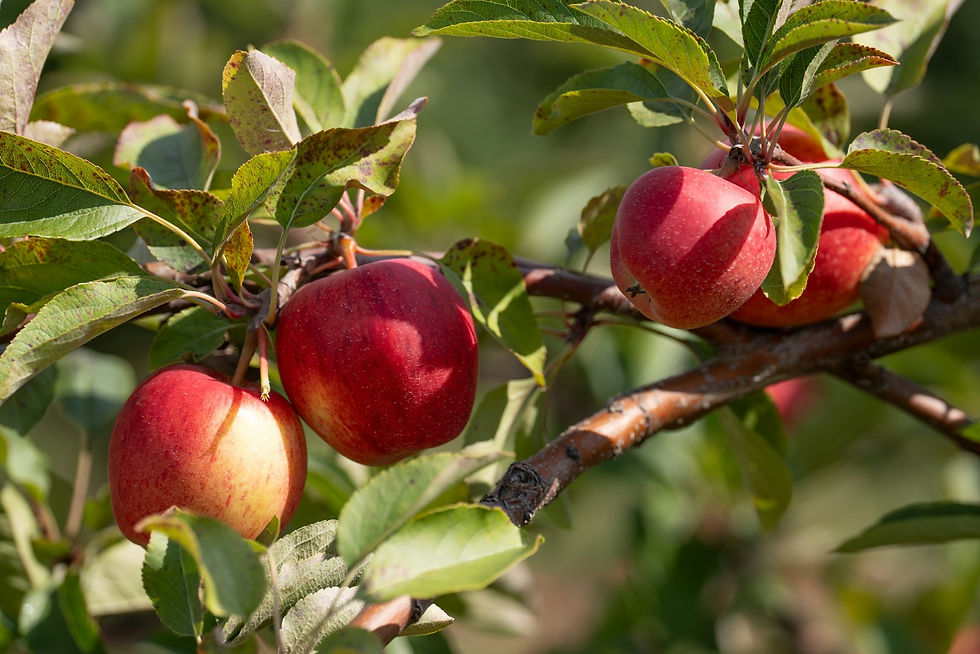
Crab apple: spring blossom for bees, sharp fruit for jelly, and a good pollinator for any apple trees nearby.
Damson: self-fertile, tough and happy in heavy clay, with tangy purple fruit for jam and gin.
Cherry plum: one of the first hedgerow plants to flower, with sweet-tart summer fruit.
Black currant: a low, productive shrub for the sunny side of the hedge.
Worcesterberry: a thorny gooseberry relative that resists mildew and makes a stock-proof section.
Aronia: hardy, tolerant of clay and sandy soils, with glossy black berries in early autumn and bright autumn colour.
Nitrogen Fixers: Feeding the Hedge
Silver buffalo berry fixes nitrogen, feeding the plants around it, and copes with poor, dry and exposed sites. It has tart red berries, but you need both male and female plants for fruit, so plant a few together.
How to Plant an Edible Hedge
Clear the line: remove grass and weeds from a strip about 1 m wide, or smother it with cardboard and mulch a few weeks before planting.
Mark two rows: set them 40 to 50 cm apart and stagger the plants so each one faces a gap in the other row.
Plant bare-root: soak the roots for an hour, plant at the depth they grew in the nursery, and firm the soil.
Mix it up: avoid long runs of the same plant, and put sun-loving fruiting plants on the sunny side.
Mulch and protect: mulch with wood chip or compost, and use guards where rabbits or deer are a problem.
Cut back backbone plants: trimming hazel and beech by about a third after planting encourages bushy growth from the base.
Water in dry spells for the first two summers and keep weeds down until the hedge closes over.
Trimming an Edible Hedge
Most hedge fruit forms on wood that grew the previous year, so heavy annual trimming removes your harvest. Trim lightly in late winter, and consider cutting one side one year and the other side the next. In Ireland, hedge cutting is restricted from 1 March to 31 August to protect nesting birds, so plan any work for autumn and winter.
FAQ: Edible Hedges in Ireland
What is the best plant for an edible hedge?
Hazel is the best all-round edible hedge plant for Ireland: it's native, fast-growing, hardy and gives nuts as well as dense cover. Mix it with fruiting plants such as elder, crab apple, damson, cherry plum and currants for a varied harvest. A mix of species also gives better wildlife value and resilience than a single-species hedge.
How many hedge plants do I need per metre?
For a dense hedge, plant about five plants per metre in a double, staggered row, with the rows 40 to 50 cm apart. For a single row, plant three to four per metre. Larger fruiting plants, such as damson or crab apple, can be spaced further apart and allowed to grow into small trees within the hedge.
When is the best time to plant a hedge in Ireland?
The best time is the bare-root season, from November to March, when plants are dormant. Bare-root hedging is cheaper than potted plants and establishes quickly in moist winter soil. Avoid planting when the ground is frozen or waterlogged, and water during dry spells in the first spring and summer.
When can I cut a hedge in Ireland?
In Ireland, hedge cutting is restricted from 1 March to 31 August to protect nesting birds, so trim hedges between September and the end of February. For an edible hedge, late winter is best, after birds have eaten the berries and before new growth begins. Trim lightly to keep the fruiting wood.

Plant Your Hedge This Winter
Bare-root season opens in November, the best time to plant a hedge. A hedge needs plenty of plants, so it's an easy order to take past free shipping over €150. Browse our fruit trees and nut trees at Earthling Plants, or see our step-by-step guide to starting a food forest for more ways to combine edible plants.


Comments