The Best Fruit Trees to Grow in Ireland (and How to Choose)

The best fruit trees for Irish gardens are apples, damsons, cherry plums and crab apples, with figs a good choice for a warm, sheltered wall. They are hardy, cope with mild, wet winters, and crop reliably without a hot summer. This guide covers the most dependable fruit trees for Irish and UK conditions, how to choose the right one for your garden, and when to plant.
Short on time? If you're only planting one tree, make it an apple on a compact rootstock. Our Katy apple tree stays at 2.5 to 3.5 m, crops early, and suits even small gardens.
What Makes a Good Fruit Tree for Ireland?
Hardiness: copes with wind, wet and the odd hard frost
Disease resistance: Ireland's damp climate encourages scab, canker and mildew, so resistant varieties matter
Flowering time: later-flowering trees are less likely to lose their blossom to spring frost
Pollination: self-fertile trees crop alone; others need a partner nearby
Size: the rootstock decides how big a grafted tree grows, so match it to your space
1. Apple: The Most Reliable Choice
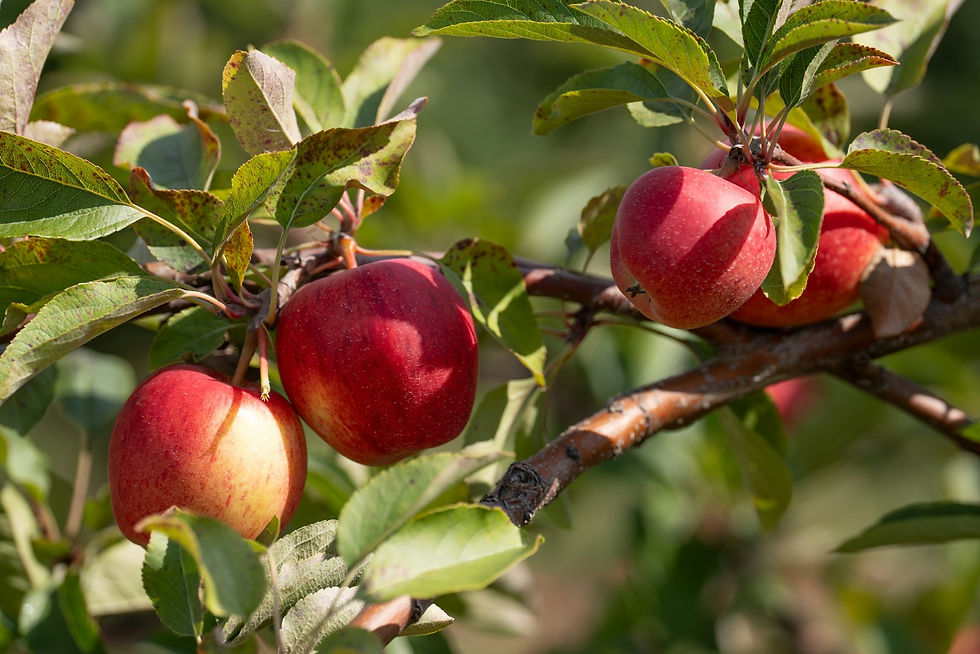
Apples are the most dependable fruit tree for Ireland and the UK. They're hardy, productive and suit every size of garden, depending on the rootstock.
Katy: a compact, early dessert apple with crisp, sweet-tart red fruit. On semi-dwarf M26 rootstock it reaches 2.5 to 3.5 m.
Pitcher's: a traditional Irish heritage apple from the west of Ireland. It grows on its own roots and flowers late, which helps it avoid spring frosts in cooler, wetter areas.
Most apples crop better with a second apple or crab apple nearby that flowers at the same time.
2. Damson: The Toughest Plum
The damson tree (Prunus domestica subsp. insititia) is the most reliable plum for Irish conditions. It's self-fertile, tolerates heavy clay and cold, exposed sites, and produces heavy crops of small, tangy purple fruit that is perfect for jam, crumbles and damson gin. At 4 to 6 m it suits medium-sized gardens and hedgerows.
3. Cherry Plum: Early Blossom and Easy Fruit
Cherry plum (Prunus cerasifera) is one of the first trees to flower each spring, giving bees vital early nectar. Small red or purple fruits follow in mid to late summer, sweet-tart and good fresh or in jam. It's easy-going, grows to 4 to 6 m, and helps pollinate other plums.
4. Crab Apple: The Pollination Partner
The native crab apple tree (Malus sylvestris) is a superb partner for apple trees, as its long flowering period helps pollinate nearby varieties. Its sharp, pectin-rich fruit makes excellent jelly, and the blossom and winter fruit feed bees and birds. A great choice for hedgerows and wildlife gardens.
5. Fig: For a Warm, Sheltered Spot
Figs crop well in Ireland when planted against a sunny, south-facing wall or in a sheltered courtyard. The Violette Dauphine fig tree is self-fertile and produces large, sweet violet figs from late summer into early autumn. Restricting its roots, in a large container or a lined planting pit, encourages fruit rather than leaves.
Something Different
How to Choose the Right Tree
Small garden: a compact apple such as Katy, or a fig in a large pot.
West of Ireland, wet or exposed site: Pitcher's apple or damson.
Heavy clay: damson.
Sunny south-facing wall: fig.
Wildlife and pollination: crab apple or cherry plum.
When and How to Plant Fruit Trees
The best time to plant is the bare-root season, from November to March, while trees are dormant. Choose a sunny spot, avoid frost pockets, and prepare a hole wider than the roots but no deeper. Our guide on how to plant a fruit tree covers planting, staking and mulching, and our fruit tree pruning guide explains when and how to prune each type. Remember that plums, damsons and cherry plums are pruned in summer, not winter.
FAQ: Fruit Trees for Ireland
What fruit trees grow best in Ireland?
Apples are the most reliable fruit tree for Ireland, followed by damsons, cherry plums and crab apples, which all cope well with mild, wet winters and cool summers. Figs also crop well against a sunny, south-facing wall. Choose disease-resistant, later-flowering varieties to reduce problems with scab, canker and spring frost.
When is the best time to plant fruit trees in Ireland?
The best time is the bare-root season, from November to March, when trees are dormant and the soil is moist. Bare-root trees establish quickly, cost less than potted trees and have time to grow new roots before spring. Avoid planting when the ground is frozen or waterlogged.
Do I need two fruit trees for pollination?
It depends on the tree. Damsons and figs are self-fertile and fruit on their own. Most apples crop better with a second apple or crab apple nearby that flowers at the same time, and cherry plums crop better near another plum. If you have room for only one tree, choose a self-fertile type.
Can I grow fruit trees in a small garden?
Yes. Apples on compact rootstocks such as M26 stay at around 2.5 to 3.5 m, and figs can be grown in large containers on a patio. Damsons and cherry plums can also be kept smaller with summer pruning. Check the rootstock and mature size before you buy, and match the tree to your space.
Start Your Orchard This Winter
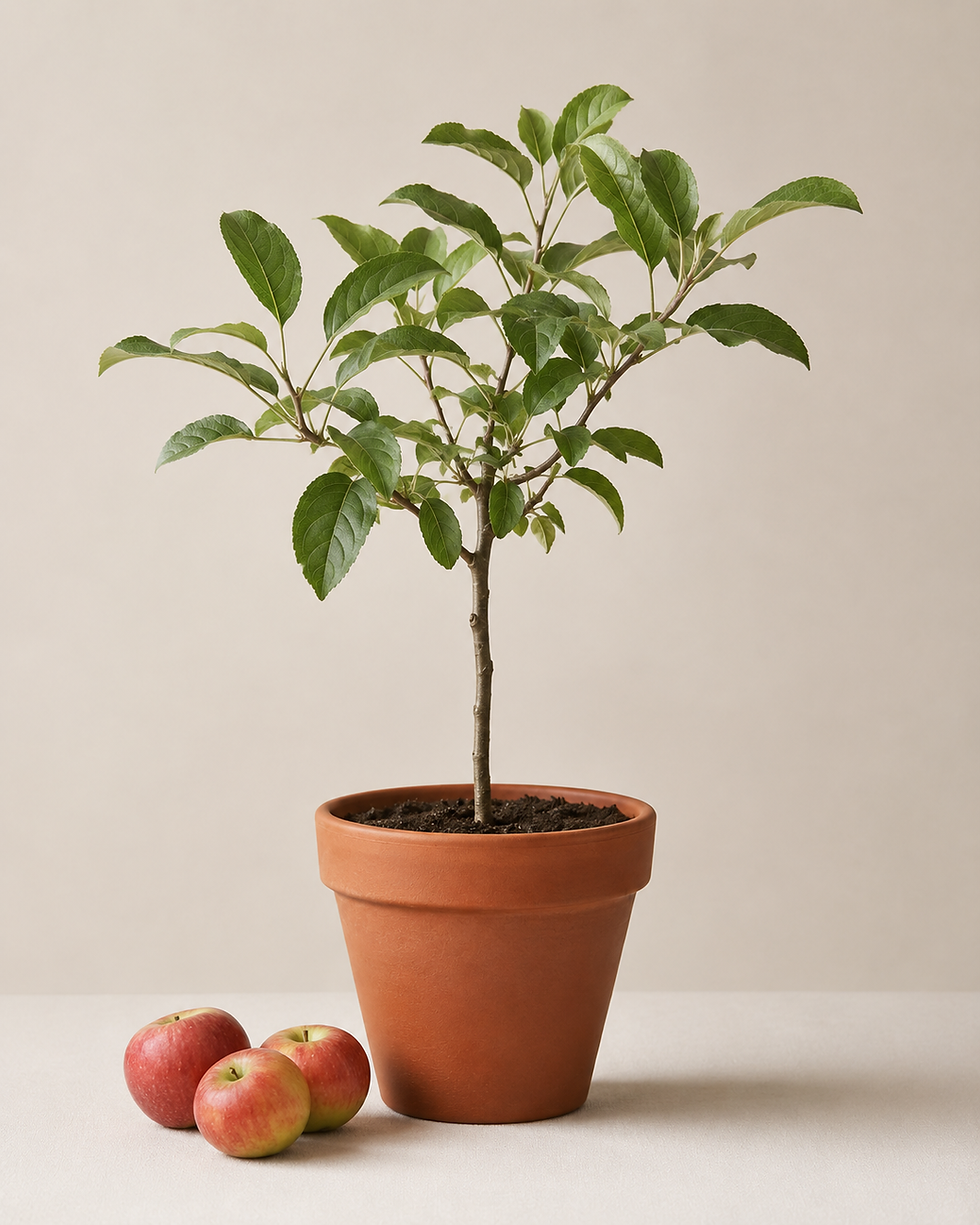
Bare-root season opens in November, and it's the best time of year to plant fruit trees. Pair an apple with a crab apple for pollination, or plant a damson and a cherry plum for a mixed plum corner. Browse all our fruit trees at Earthling Plants; orders over €150 ship free.


Comments