Growing Fruit in Pots: What Crops Well in a Container

Growing fruit in pots works for most kinds, and a few crop better in a pot than they do in the ground. Strawberries, blueberries and figs are the easiest, followed by apples on a dwarfing rootstock, currants and autumn raspberries. The method is the same for nearly all of them: a container 45 to 50 cm across, a loam-based compost, steady watering and a high-potash feed through summer. This guide is written for a cool temperate climate like Ireland's, where winter wet is a bigger threat to pots than winter cold.
Why Grow Fruit in Pots
The obvious reason is space. A paved yard, a balcony or a rented garden can all hold a pot. There are three less obvious reasons, and they explain which fruits do best.
Control of the soil: blueberries need acid soil, and most gardens do not have it. In a pot of ericaceous compost they get exactly what they want.
Control of vigour: a fig in open ground makes a huge leafy tree and little fruit. With its roots confined, it stays small and crops well.
Mobility: tender fruit can spend summer in the sun and winter under cover. Peaches and apricots can be moved out of the rain in spring, which is what protects them from peach leaf curl.
The costs are just as real. A pot holds a tiny volume of soil compared with open ground, so the plant depends on you for every drink and every nutrient. In a warm spell that means watering every day. Crops are smaller than from the same plant in the ground, and a tree left for years in the same compost slowly declines. None of this is difficult, but all of it needs to be done.
Pot, Compost and Position
The RHS recommends a pot about 45 to 50 cm in diameter for most fruit. Start a young plant in something a size or two smaller and move up, because a small root system sitting in a large mass of wet compost tends to rot. Clay pots are heavy and stable, which matters for a tree in a windy spot. Plastic is lighter and dries out more slowly.
Use a loam-based compost. The weight keeps the pot upright, and loam holds water and nutrients far better than a light multipurpose mix. The RHS alternative is multipurpose compost with a third of its volume of grit added. Choose peat-free in either case. Blueberries are the exception and need an ericaceous compost.
Stand the pot on feet or bricks so the drainage holes stay clear, and put it in full sun. In a wet winter, a pot sitting flat on a patio fills with water from below and the roots drown.
The Easiest Fruit for Pots
Strawberries: the simplest of all. Three or four plants fill a 30 cm pot or a hanging basket, and the fruit hangs clean over the edge, away from slugs. Replace strawberry plants every three years, using the runners they produce.
Alpine strawberries: small, intensely flavoured and tolerant of part shade. Alpine strawberries make no runners, so they stay neat in a pot or window box and fruit from June to October.
Blueberries: better in pots than in most garden soils. Use ericaceous compost and water with rainwater, since hard tap water gradually raises the pH. A blueberry crops more heavily with a second variety nearby.
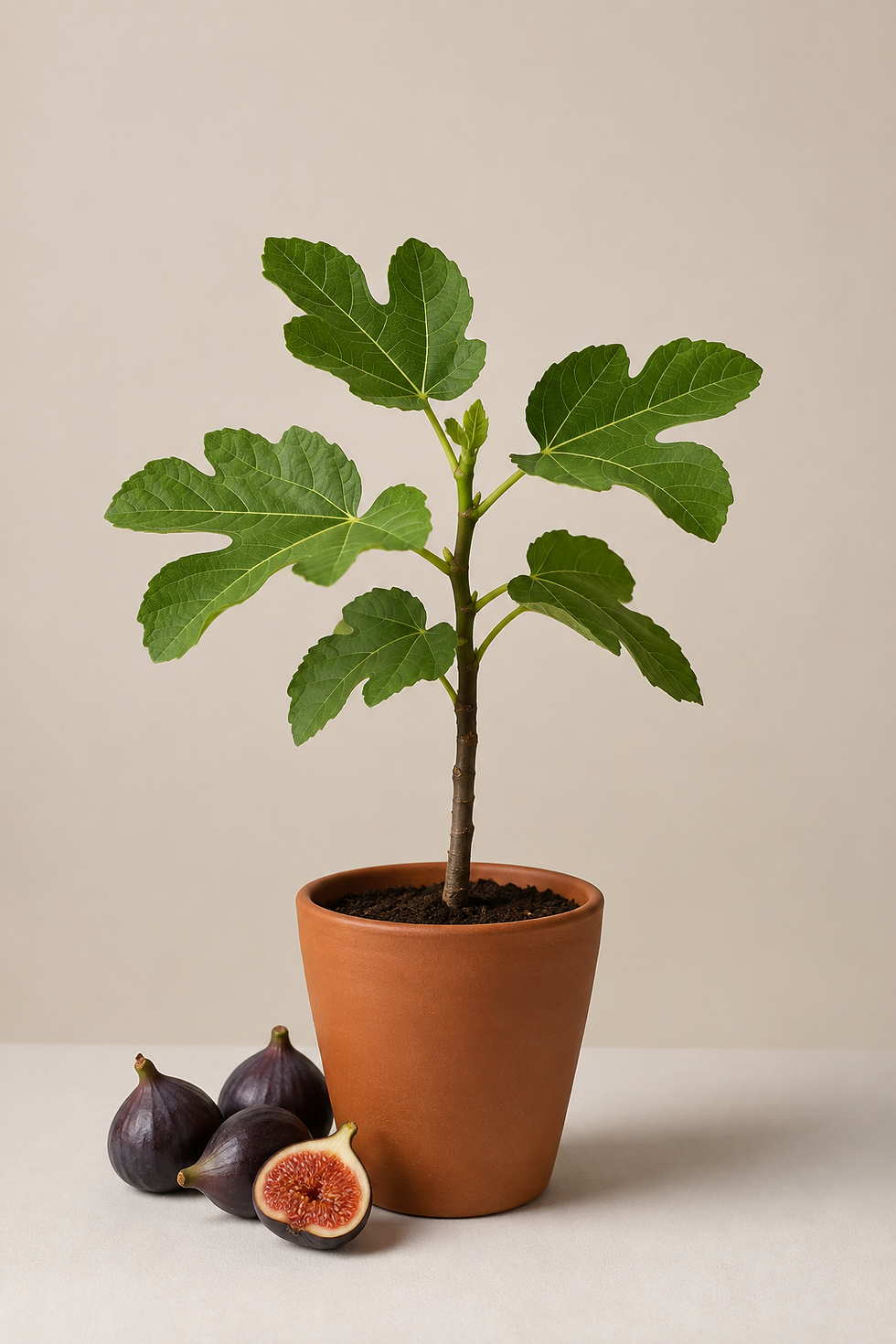
Figs: made for containers. A fig in a 45 cm pot against a sunny wall fruits earlier in life and more reliably than one with a free root run. Our fig growing guide covers the pruning.
Tree Fruit Needs the Right Rootstock
Apples, pears, plums and cherries are grafted, and the rootstock decides whether the tree can live in a pot. Too vigorous and it outgrows the container in two years. Too weak and it never copes with the stress. These are the rootstocks the RHS recommends for containers.
Apples: M26 or M9. The very dwarfing M27 is too weak for pot life. 'Discovery', 'Sunset' and 'Falstaff' are among the varieties suggested.
Pears: Quince C, with 'Concorde' and 'Conference' both suitable.
Plums and damsons: Pixy or St Julien A. 'Victoria' and 'Opal' are self-fertile, which saves needing a second tree.
Cherries: Gisela 5 or Colt, with a self-fertile variety such as 'Stella' or 'Sunburst'.
Peaches, nectarines and apricots: St Julien A, grown as compact patio trees and moved under a lean-to or into a tunnel from late winter to keep rain off the opening buds.
Pollination still applies in a pot. One self-fertile tree will crop alone. Otherwise you need two compatible varieties, or a neighbour's tree within bee range.
More Fruit That Works
Currants and gooseberries: a single bush is happy in a 45 cm pot for years and can be trained as a short standard on a clear stem, which makes picking easy.
Autumn raspberries: the RHS suggests a container at least 40 cm wide and 30 cm deep for a single plant. Summer types grow too tall.
Grapes: a vine such as Grape 'Vanessa' can be grown as a standard in a large pot, pruned hard each winter to a short framework.
Bay: grown for leaves, not fruit, but it belongs on any list of edible trees for pots. A bay tree takes clipping and lives in a container for decades.
Citrus and olives: lemons and calamondins fruit well in pots if they spend winter somewhere bright, cool and frost-free. Olives are hardier and stay out in mild areas.
Some fruit is not worth trying. Kiwi, walnut, sweet chestnut and full-size orchard trees are too vigorous for any pot. Blackberries and hybrid berries need a very large container, and only the compact varieties suit one.

Watering and Feeding
Water generously, then let the surface of the compost dry before watering again. It should never dry right out. In summer a tree in full leaf may need water every day, and a fruit tree that goes short while its crop is swelling will drop the fruit. Push a finger 3 cm into the compost. If it is dry at that depth, water until it runs from the base.
Feed from April to September. Either mix controlled-release fertiliser into the compost each spring or give a high-potash liquid feed, the kind sold for tomatoes, every two weeks. A 3 cm mulch of bark or gravel on the surface slows drying and stops the compost crusting.
Repotting and Winter Care
Move a young plant up a pot size every year or two, after leaf fall. Once it is in its final container, the RHS routine is to root-prune every other winter: slide the tree out, trim the outer roots, tease away about a third of the old compost and replant with fresh. In the years between, scrape off the top 5 cm and replace it.
Hardy fruit stays outdoors all winter. The danger in a wet climate is waterlogging, so keep the pots on feet and out of saucers. In a hard frost the roots are more exposed than they would be in the ground. Push the pots together against a house wall, and wrap them in hessian or bubble wrap if several nights below minus 5°C are forecast.
Frequently Asked Questions
What Is the Easiest Fruit to Grow in a Pot?
Strawberries, followed by blueberries and figs. All three crop within a year or two, need no pollination partner to give some fruit, and positively suit container life. An apple on M26 is the easiest tree fruit.
How Big a Pot Does a Fruit Tree Need?
A final pot of 45 to 50 cm across and about as deep. Start smaller and move up in stages over three or four years. Bigger is not better at the start, because unused compost stays wet and cold around the roots.
Can a Fruit Tree Stay in a Pot Permanently?
Yes, if it is on a suitable rootstock and you renew the compost. Root-pruning every second winter and top-dressing in between keeps a potted apple or fig productive for many years. Without that, it runs out of steam in about five.
How Often Should I Water Fruit in Pots?
Check daily from May to September and water whenever the top 3 cm is dry. In hot or windy weather that is every day. In winter, rain is usually enough, and the task is to make sure the water can drain away.
Do Potted Fruit Trees Need Pruning?
They are pruned in the same way as trees in the ground, only more lightly. Summer pruning in August, shortening the new side shoots, is the main job for apples and pears, as it keeps them compact and encourages fruit buds.
The Short Version
Choose a fruit that suits a pot, give it loam-based compost and sharp drainage, and commit to the watering. Strawberries, blueberries and figs will reward you soonest. Earthling Plants grows the plants linked above, and if you have open ground as well, our guide to the best fruit trees covers what to plant there.


Comments