Cotoneaster
€9.95
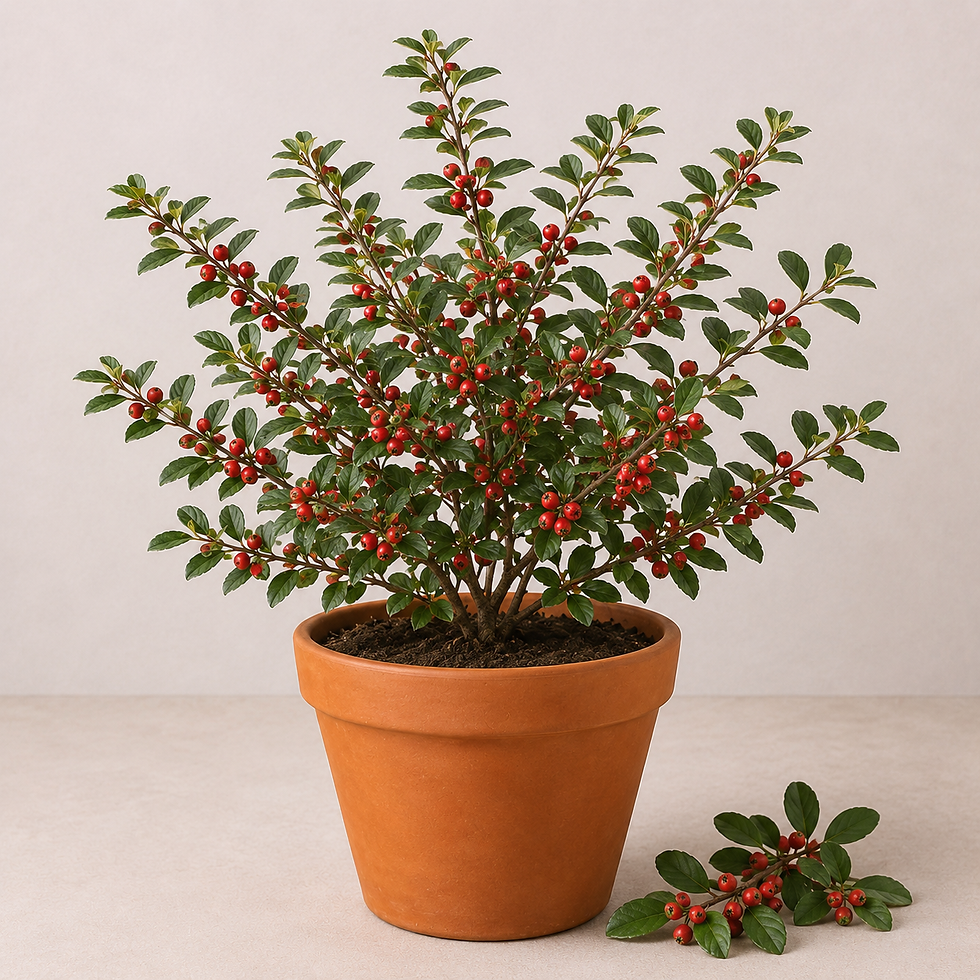
Franchet’s Cotoneaster (Cotoneaster franchetii) is a hardy, semi-evergreen to evergreen ornamental shrub that typically reaches 2–3 m tall, forming graceful arching stems with small grey-green leaves that are softly felted beneath. In late spring to summer, it produces clusters of small white to pale pink flowers that are highly attractive to bees, hoverflies, butterflies, and other beneficial insects. These are followed by bright orange-red berries in autumn and winter, providing valuable seasonal colour and an important food source for birds. Please note: this is not an edible plant for humans, and the berries should not be eaten. Franchet’s Cotoneaster is easy to grow and is ideal for gardeners of all experience levels, bringing structure, wildlife value, flowers, berries, and year-round interest to hedges, mixed borders, wildlife gardens, forest garden edges, shelterbelts, and permaculture plantings.
Franchet’s Cotoneaster thrives in full sun to partial shade and prefers well-drained, moderately fertile soil, tolerating poor soil, wind, coastal exposure, and dry conditions once established. It is hardy in Ireland’s cool temperate climate and is especially useful as a resilient wildlife shrub, offering nectar for pollinators, berries for birds, and dense branching for shelter and nesting. Its tough nature, attractive arching habit, long berry season, and low-maintenance growth make it an excellent choice for biodiversity-friendly gardens and regenerative planting systems where wildlife support, shelter, and ornamental value are the main goals.
Quantity
Only 2 left in stock
Growing Instructions
Plant in full sun or partial shade in well-drained, moderately fertile soil enriched with compost if the ground is very poor. Water regularly during dry spells while young plants are establishing, and apply a mulch of compost, leaf mould, or woodchip each spring to retain moisture, suppress weeds, and support healthy soil life.
Prune lightly after flowering or berrying to remove dead, damaged, or overcrowded growth and to maintain the desired shape, taking care not to remove too many berrying stems if planting for wildlife. Once established, Cotoneaster is drought tolerant and requires very little maintenance. Its pollinator-friendly flowers, bird-feeding berries, tough growth, and year-round ornamental value make it perfect for wildlife gardens, hedges, banks, difficult slopes, mixed borders, shelter planting, and permaculture systems seeking beauty, resilience, and biodiversity support.